Team

Back Behind the Bar: Bjørn’s Margarita and 11 Years of Perspective.

Alexandre Ruas was back behind the bar at Torto’s anniversary, so we took the opportunity to make him talk about it. There was some rust, an old favorite in Bjørn’s Margarita, and a few thoughts on how bartending has changed in the 11 years since his last proper shift.
Joana
Marketing

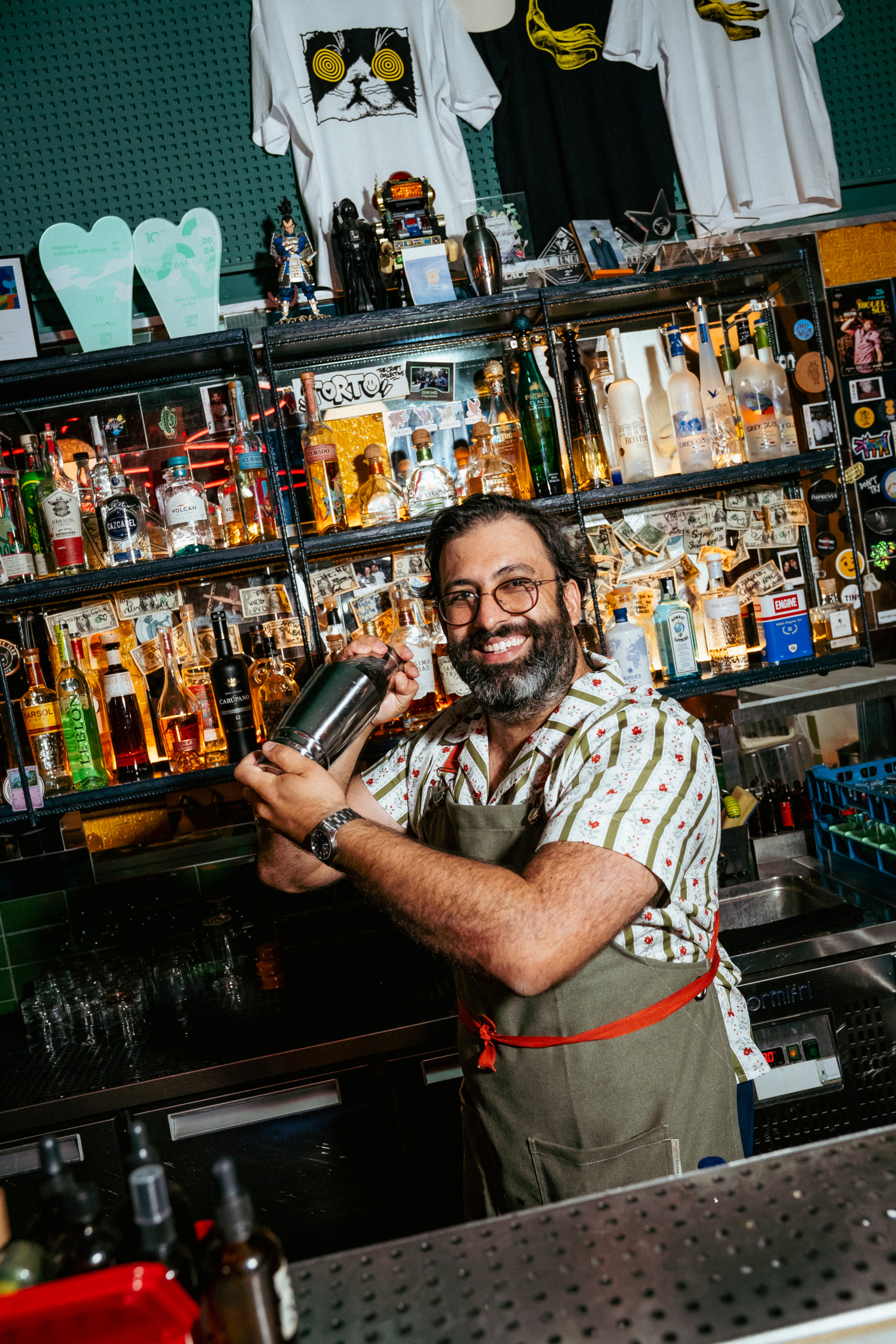
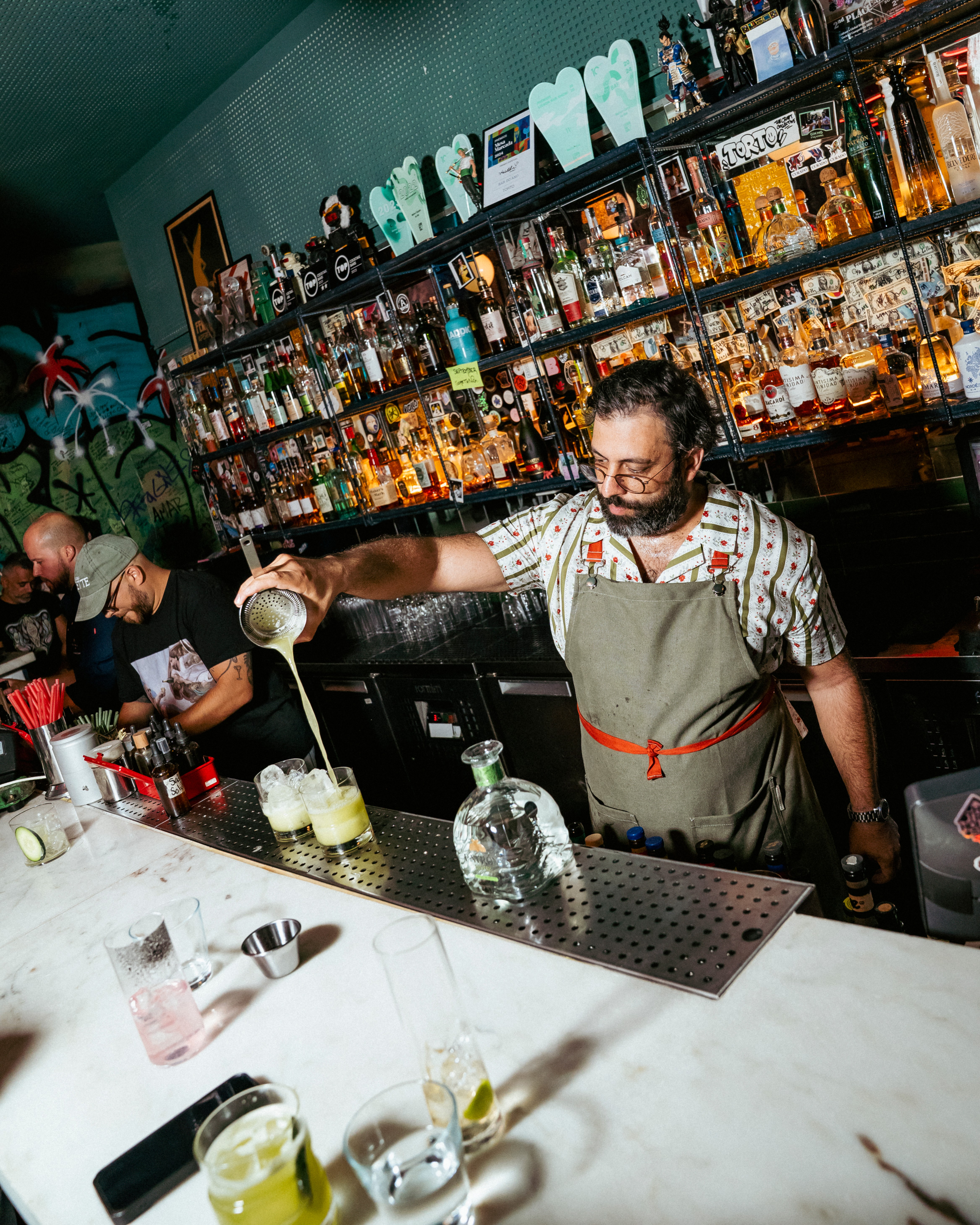
Torto’s anniversary brought some familiar faces back behind the bar. For Alex Ruas, co-founder of Behind Bars, that meant doing something he hadn’t properly done in around 11 years: working a shift.

His verdict?

“Very rusty.”

But not completely lost.

“It was like riding a bike. The basics came back quickly. I definitely felt it physically, though. Bartending is almost like being a professional athlete. If you’re not used to constantly moving, shaking, handling bottles and keeping up conversations at the bar, your body notices.”

Luckily, this was an anniversary guest shift rather than a return to full-time employment.

“They had everything prepped for me, so I was very spoiled. I could practically drop the shaker and leave.”

Some things come back. Others take a minute.

The last time Alex remembers properly working behind a bar was around the opening of Himkok in Oslo, with perhaps a handful of shifts afterwards. From there, his attention moved fully to Behind Bars.

Eleven years later, muscle memory was still there. The maths required a little more concentration.

“I was mainly focused on making the drinks. Some skills are like muscles. If you don’t use them, they get rusty. For me, the challenge was making five drinks at once, keeping the maths straight and not getting distracted.”

There was no grand comeback mentality. It was an anniversary, the atmosphere was relaxed and the objective was fairly straightforward: make drinks and enjoy being back.

“It was all fun and laughs, nothing too serious. I’m sure a few drinks went out that weren’t perfectly balanced anyway.”

He had also done very little to prepare.

“I just turned up and hoped for the best.”

Looking at a bar differently

Of course, spending the past decade designing and building bars makes it difficult to stand behind one without looking at how it works.

Alex caught himself doing exactly that.

“For sure. Torto wasn’t designed by Behind Bars, and it’s an amazing venue. But I found myself noticing things like the shaker rinser and the height of the cocktail-building area.”

Not as a critique of the venue, but as a reminder of just how much the physical setup becomes part of a bartender’s shift once service gets busy.

“You really see the importance of good design when the bar is full and tickets start pouring in.”

It took him back to his own years working in bars, when an undersized ice well could mean refilling it six or ten times in a night, glassware running out meant walking across the room for more, and small inefficiencies added hundreds of unnecessary movements to a shift.

“You can control your preparation, but you can’t change the space during service. These details need to be considered from the start.”

One of his early influences actually came from outside the bar.

“I was fortunate to work in large hotels, and I learnt a lot from watching chefs. The preparation, the tools, the organisation and the systems were all designed to support fast, consistent service.”

At the time, he felt bartenders were rarely given the same level of consideration.

“That has changed enormously over the past 20 years. Today, much more thought and intention goes into designing bars around the people who actually work behind them.”

The bit designers can forget

Going back behind the counter also flipped the perspective.

At Behind Bars, much of Alex’s day is now spent thinking about workflow, engineering, equipment and how a bartender moves through a station. Working an actual shift again was a reminder that bartending is never just a sequence of physical tasks.

“It’s easy to forget what guests see and experience from the other side of the bar.”

A bartender might be building several drinks while taking an order, talking to a guest, planning the next round in their head and watching the station next door to see whether a colleague needs help.

“We focus a lot on function, but bartenders are constantly multitasking. Understanding that perspective is essential.”

His solution for keeping designers connected to reality is perhaps slightly less conventional.

“It made me think we should send everyone to a bartender base camp. If anyone wants a designer to help cover a shift, let me know.”

He laughs, but there is a serious point underneath it.

“Designers spend much of their time working at a desk and on a computer, so hands-on experience really matters. Several of our designers already have bartending backgrounds, which makes a real difference.”

A different bar world

Eleven years is also long enough to notice how much the profession itself has moved.

For Alex, the most obvious difference is what happens before a bartender even starts serving.

“The biggest change I see is how technical drinks have become. So much of the work now happens before service, with clarification techniques and specialised equipment. Bartenders have pushed the craft incredibly far, and the drinks taste amazing.”

He is quite happy to admit that some of it makes him feel behind the times.

“When I stopped bartending, we were only beginning to explore these techniques.”

His generation was dealing with a different challenge.

“A lot of our focus was on bringing back delicious classics and encouraging guests to try something beyond a gin and tonic or a beer. In a way, our generation helped educate the consumer. Today’s bartenders benefit from that, although more knowledgeable guests also bring higher expectations.”

For all the techniques, equipment and increasingly ambitious drinks, one part feels exactly the same.

“What hasn’t changed is the social interaction. Welcoming people into your house, making them feel special and being a great host. That passion for hospitality remains exactly the same.”

And that was ultimately what he enjoyed most about being back.

“The people. I missed being surrounded by everyone, both behind the bar and out front. The quick chats, meeting interesting people and feeling part of the community, culture and energy.”

The drink: Bjørn’s Margarita

For the shift, Alex returned to a drink from his bartending years rather than trying to prove he could keep up with a decade of cocktail innovation.

Bjørn’s Margarita started at the Bristol Hotel in Oslo.

“I had a regular called Bjørn who loved exploring off-menu drinks and had a particular taste for Tommy’s Margaritas. One day he asked me for something fresh in the same family.”

There happened to be cucumber prepped at the bar.

“So I added it. It was an immediate success and quickly became Bjørn’s go-to drink.”

Eventually, the drink made its way onto the menu and became one of the hotel’s bestsellers. Alex remembers it appearing in Norwegian newspapers and then, unexpectedly, on menus at other bars around the country.

“It became so well known that Bjørn’s friends found it hard to believe the drink had originally been created for him.”

Of all the drinks Alex created during those years, it remains one of his favorite examples of something very simple growing far beyond the moment that created it.

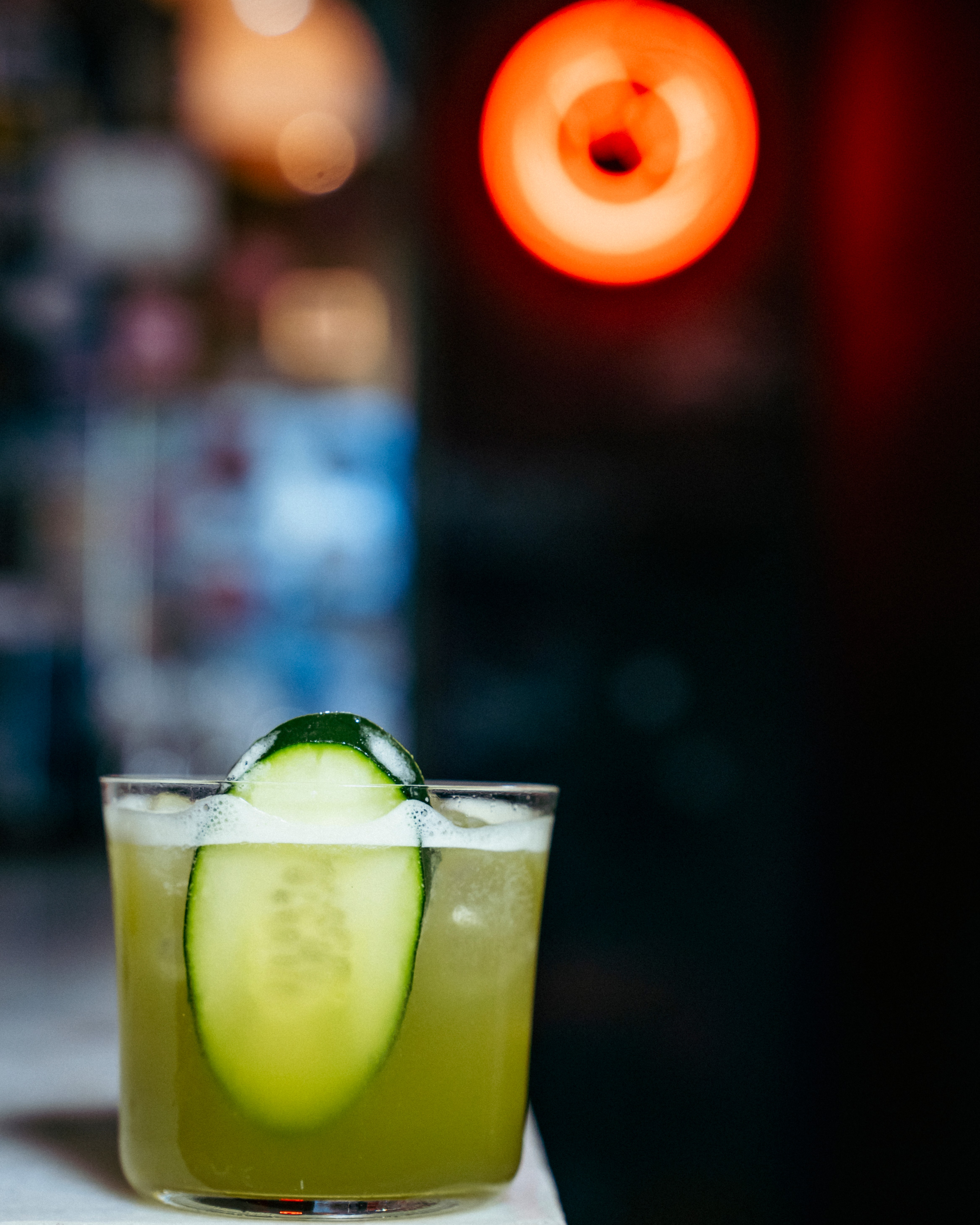
Bjørn’s Margarita

3 cl lime juice

2.5 cl agave syrup

4 cl agave spirit

2 slices cucumber

Gently muddle the cucumber in a shaker.

Add the lime juice and agave syrup first and taste for balance, as agave syrups can vary considerably in sweetness.

Add the spirit, fill with ice and shake hard until the shaker is properly chilled.

Double-strain into a rocks glass with a half salt rim and garnish with cucumber.

Enjoy.

So, another shift in 11 years?

The night may have brought back the enjoyment, but Alex isn’t planning a return to bartending.

“I still feel deeply connected to bars because I now help build them, and the passion is definitely still there. But, like in football, you have to know when it’s time to step aside.”

And apparently the current generation deserves the professional-athlete comparison more than he does.

“Bartending is demanding, and I have huge respect for those who stay behind the bar for the long run. You’re the Ronaldos of bartending.”

Today, he is happier working behind the scenes. Behind Bars has now worked on more than 645 bars around the world, which gives him a different way of staying close to the profession he left.

“I’m happy with where I am now and with how I can influence the industry. I enjoy being behind the scenes, helping to improve the craft of bartending.”

There is, however, one idea that has never entirely disappeared.

“I still dream of owning a bar one day.”

Would he work behind it?

“I know I wouldn’t be the one bartending.”

Probably for the best. His body may need another 11 years to recover from Torto.

Photography: Ana Coutinho

Recent articles

The Spill is our online editorial where we discuss all things "bar" - from guidelines and favorite cocktails, to useful innovation and loose ideas.

Take me there
Let's talk

Ready to build your bar?

With 625+ projects across 60+ countries, we are fortunate to collaborate with some of the most exciting F&B projects around the world. Are you next?
Alex
Sam
Todd
Eleonora